
Language
EN TR
Visit Embedarium
FLAGSHIP PRODUCT: EMBEDARIUM — CIRCUIT SIMULATOR, MULTI-MCU IDE & PCB DESIGNER

Circuit Simulation, a Multi-MCU IDE and PCB Design — in the Browser

Created by SDD Labs, Embedarium brings the embedded engineering lab to the browser: design circuits and analyze them with SPICE, build firmware in the browser (8051 family) or on the server (AVR, Arm Cortex-M0+, PIC), simulate seven microcontroller targets instruction by instruction with cycle counting, and lay out 2- or 4-layer PCBs.

7
MCU targets in the simulator
4
Architectures: 8051 family, AVR, Arm Cortex-M0+, PIC16
2/4
Copper layers in the PCB designer
EN/TR
Interface languages
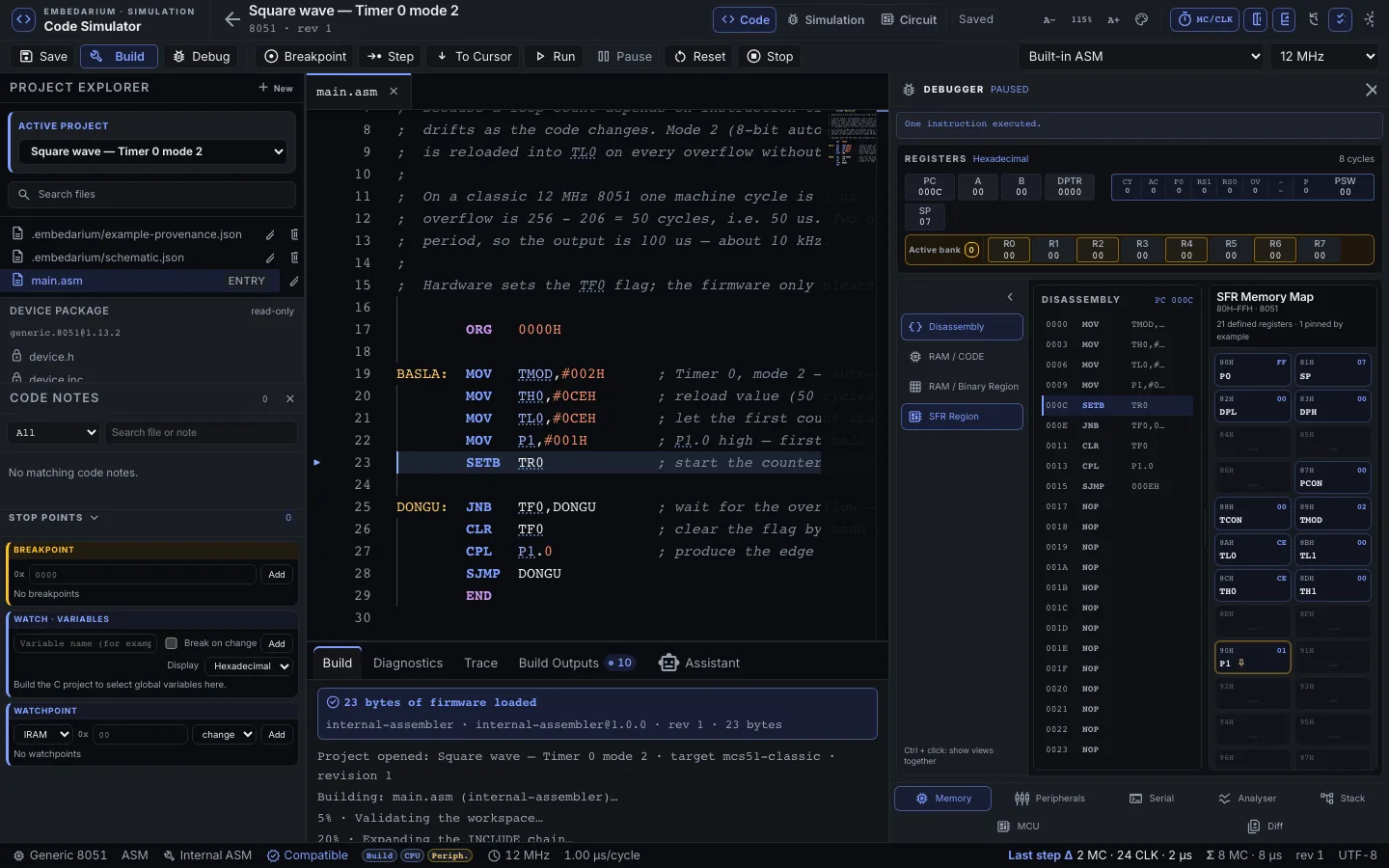
Embedarium — IDE and simulator
Screenshot
Screenshot of the Embedarium IDE and simulator
The Embedarium IDE: write and build firmware, then step through it in the simulator while watching the microcontroller's registers, memory and peripherals.
★ OUR PRODUCTS

Products Engineered by SDD Labs

Embedarium for teaching and practicing embedded engineering; FastOMR for designing, reading and scoring optical answer sheets.

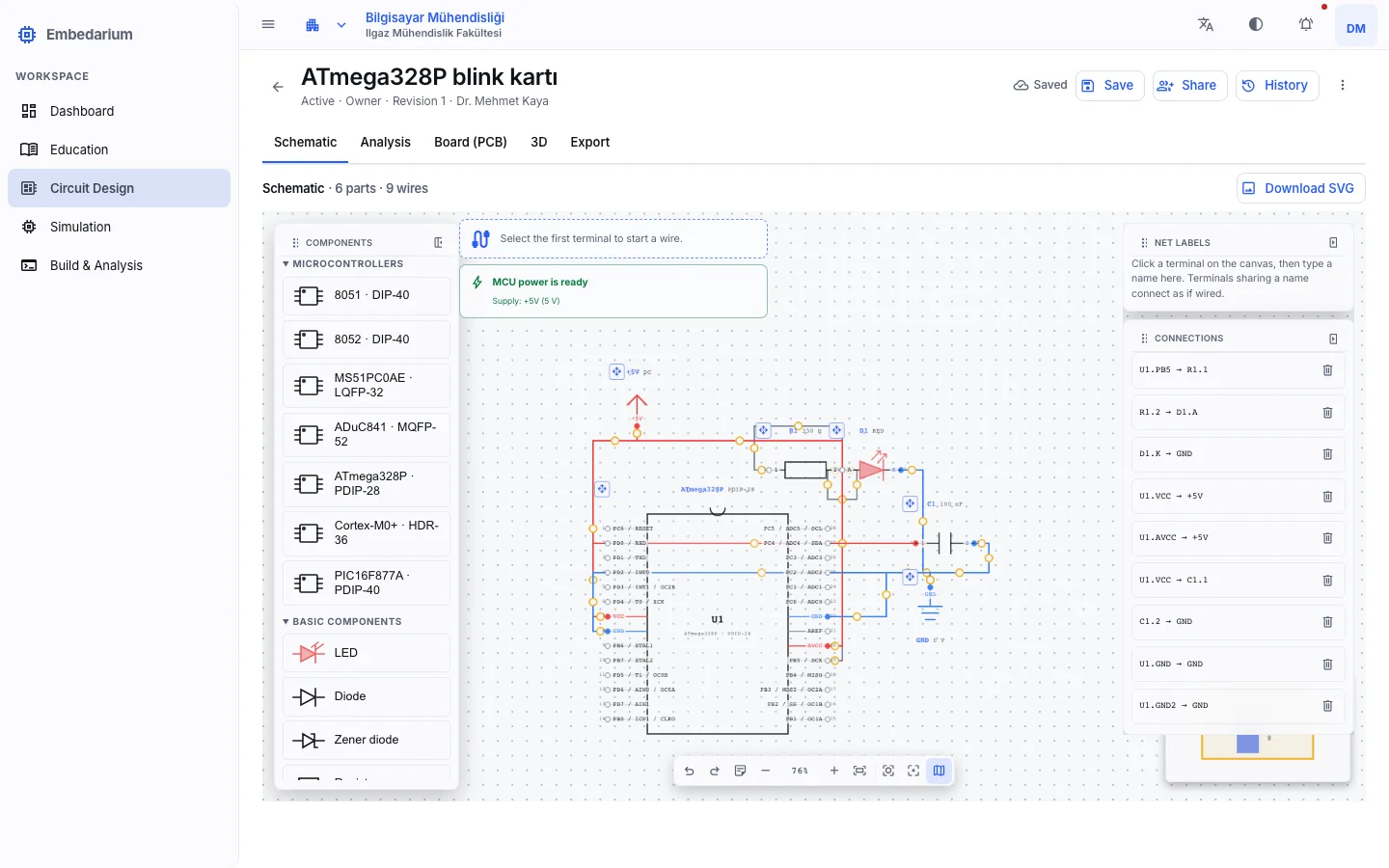
Screenshot of the Embedarium schematic editor
★ FLAGSHIP MCU Simulation

Embedarium

Circuit Simulator, Multi-MCU IDE & PCB Designer

Embedarium brings the embedded engineering lab to the web browser. Analyze circuits with SPICE (operating point, DC sweep, transient and AC, run on the server), simulate seven microcontroller targets with cycle counting, probe signals with a 4-channel virtual oscilloscope and a logic analyzer, and lay out 2- or 4-layer PCBs with an A* autorouter and design rule checks.

  • Generic 8051, 8052, Nuvoton MS51, ADuC841, ATmega328P, Arm Cortex-M0+ and PIC16F877A targets
  • Gerber X2, Excellon drill, BOM and pick-and-place (CPL) export
  • Courses with automatic grading, plagiarism check, gradebook and LTI 1.3
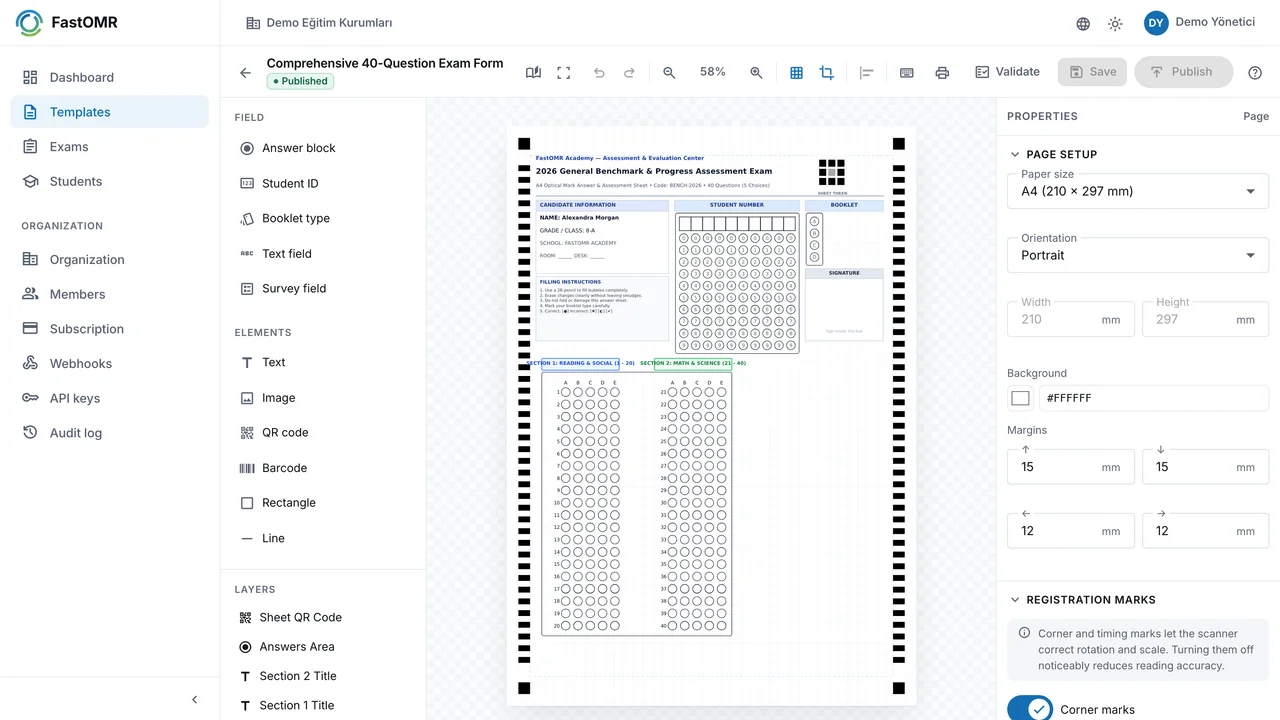
Screenshot of the FastOMR answer sheet designer
Optical Mark Recognition Assessment Platform

FastOMR

Design, Print, Scan and Score Answer Sheets with Ordinary Printers and Scanners

FastOMR needs no dedicated OMR scanner or pre-printed forms. Design an answer sheet to the millimeter, print it as a vector PDF on plain paper, scan the stack or photograph it with a phone camera, and get every sheet read and scored — with item analysis, KR-20 reliability and report cards.

  • Millimeter-precise form designer with vector PDF output
  • Perspective correction (homography) and shadow flattening before reading
  • Multiple booklets (e.g. A/B/C/D) with their own answer keys; unclear marks go to human review
CORE COMPETENCIES

The Engineering Behind Our Products

The engines inside Embedarium and FastOMR: instruction-level MCU simulators, circuit and PCB tools, answer-sheet image processing, and the web platforms that run them.

Embedded MCU Simulation

Instruction-level simulators with cycle counting for the 8051 family, AVR, Arm Cortex-M0+ and PIC16: timers, serial ports and GPIO on every target, plus ADC, SPI, I²C and PWM on several of them (Embedarium).

TypeScript Web Worker SDCC → Wasm Cycle counting

SPICE & PCB Engineering

SPICE analyses — operating point, DC sweep, transient and AC — run on the server; PCB layout on 2 or 4 copper layers with an A* autorouter, design rule checks and Gerber X2 export.

SPICE A* autorouter Gerber X2 Virtual scope

Computer Vision & OMR

Corner-mark registration, homography-based perspective correction, shadow flattening and orientation detection, then bubble-fill measurement that sends double or unclear marks to a person (FastOMR).

TypeScript Homography Vector PDF QR codes

Web Platforms & Deployment

Multi-tenant web applications with background job queues, Argon2id passwords, TOTP two-factor sign-in and audit logs, deployed with Docker Compose; Embedarium can also be installed on-premises by agreement.

NestJS Angular PostgreSQL Docker
SYSTEM ARCHITECTURE

How Our Products Work

A closer look at the mechanics behind Embedarium and FastOMR.

Instruction-Level MCU Simulation with Cycle Counting

Embedarium’s emulators are TypeScript packages that run in a Web Worker in the browser. They execute firmware instruction by instruction and count the cycles each instruction takes:

  • 7 targets, 4 architectures: generic 8051, 8052, Nuvoton MS51 and Analog Devices ADuC841; Microchip ATmega328P; Arm Cortex-M0+ (CMSDK-based); PIC16F877A.
  • Builds: 8051-family C is compiled in the browser by SDCC compiled to WebAssembly; AVR, Arm and PIC builds run on the server.
  • Instruments & grading: a 4-channel virtual oscilloscope, a logic analyzer, and courses graded automatically by UART test cases, waveform checks and netlist rules.
Visit Embedarium
// Embedarium simulator — at a glance targets 7: generic 8051, 8052, MS51, ADuC841, ATmega328P, Cortex-M0+, PIC16F877A execution instruction by instruction, cycles counted per instruction runs in a Web Worker, in the browser 8051 C build SDCC → WebAssembly, in the browser other builds on the server

SPICE Analysis and PCB Design

Embedarium’s SPICE engine uses modified nodal analysis with Newton–Raphson iteration and models resistors, capacitors, inductors, diodes, bipolar transistors, MOSFETs and controlled sources. The analyses run on the server:

  • Analyses: operating point, DC sweep, transient (trapezoidal integration) and small-signal AC, with results compared against ngspice in our tests.
  • MCU and circuit together: during MCU simulation, parts wired to the microcontroller on the schematic — LEDs, keypads, a 16×2 LCD — follow the firmware.
  • PCB: 2 or 4 copper layers, an A* autorouter and design rule checks, with Gerber X2 (file attributes), Excellon, BOM and pick-and-place (CPL) export.
Product details
// SPICE and PCB — at a glance method modified nodal analysis + Newton–Raphson analyses operating point · DC sweep transient · AC (small-signal) runs on the server PCB 2 or 4 copper layers routing A* autorouter + DRC export Gerber X2 · Excellon · BOM · CPL

Registration, Perspective Correction and Mark Reading

FastOMR reads sheets from office scanners, PDFs and phone photos without dedicated OMR hardware. The designer, the PDF generator and the reader share one millimeter-based geometry, so what is drawn, printed and read is the same point:

  • Normalization: EXIF orientation, grayscale, a fixed working resolution and shadow flattening; the sheet’s orientation is detected, so a page fed upside down is not misread.
  • Registration: the four corner marks are located and a homography is solved, correcting skew and perspective — which is what makes a phone photo readable.
  • Interpretation: the fill inside each bubble is measured; double or ambiguous marks are not scored automatically but go to an operator for review.
Visit FastOMR
// FastOMR reading pipeline image → normalize → registration (homography) → bubble sampling → interpretation inputs scanner images · PDFs · phone photos geometry one millimeter-based source for designer, PDF and reader unclear double / ambiguous marks → review

Security and Data Protection

Both products run as server-backed web applications: projects, scans and results are stored on the server, not only in the browser. What protects them:

  • Accounts: Argon2id password hashing and TOTP two-factor authentication in both products.
  • Tenant isolation: every query is scoped to the organization; Embedarium additionally enforces PostgreSQL row-level security.
  • Personal data (GDPR/KVKK): FastOMR can export or erase a student’s data on request and clear exam data after a retention period the school sets; destructive actions are written to an audit log.
Read Privacy Policy
// Where the work happens Embedarium MCU simulation browser (Web Worker) 8051 C build browser (SDCC → Wasm) AVR / Arm / PIC server SPICE analyses server projects stored on the server FastOMR reading, scoring server (queue workers) scans and PDFs server-side storage
WHO IT'S FOR

Where Our Products Fit

Our products are built for engineering education and for assessment: labs, exams, surveys and the systems around them.

Engineering Labs & Academia

Browser-based circuit and microcontroller labs (Embedarium), with assignments graded by UART test cases, waveform checks and netlist rules, a plagiarism check and a gradebook.

Read Lab Solutions

Schools & Exam Centers

Answer sheets designed, printed and read in-house: multiple booklets with their own keys, penalty and net-score rules, item analysis and report cards (FastOMR).

Read Education Solutions

Surveys & Questionnaires

Likert-scale and multiple-choice forms designed, printed and read like answer sheets, with each question’s answers counted option by option (FastOMR).

FastOMR Details

Integrations

Embedarium implements LTI 1.3 for learning management systems; FastOMR offers a REST API with scoped API keys, an OpenAPI reference and signed webhooks.

Discuss an Integration
FREQUENTLY ASKED QUESTIONS

Everything You Need to Know About SDD Labs

Answers regarding Embedarium, FastOMR, and our engineering capabilities.

Embedarium is SDD Labs' browser-based circuit simulator, multi-MCU IDE and PCB designer for engineering education. Its emulators are TypeScript packages that run in a Web Worker in your browser and execute firmware instruction by instruction, counting cycles. 8051-family C code is compiled in the browser by SDCC compiled to WebAssembly; AVR, Arm and PIC builds and SPICE analyses run on the server. Nothing has to be installed on students' computers.

SDD Labs is the software company that develops both products. Embedarium (embedarium.com) is our flagship platform for circuit design, microcontroller simulation and PCB design in engineering education. FastOMR is our platform for designing, printing, reading and scoring optical answer sheets.

Yes. Embedarium has courses with automatic grading (UART test cases, waveform checks and netlist rules), a winnowing-based plagiarism check, a gradebook and seat-based licensing for departments. It implements LTI 1.3 (launch, Deep Linking and Assignment and Grade Services); so far this has been verified against a simulated LTI platform, not yet with a production LMS. Institutions can request a pilot or a quote.

Yes, by agreement: Embedarium can run on an institution's own server with Docker Compose. The installation itself needs internet access, so it is not a fit for fully offline (air-gapped) networks.

Not at the moment: neither product offers public sign-up or online purchase. For Embedarium, institutions request a pilot or a quote. FastOMR accounts are set up by an administrator, so contact us for access.

Bring Embedarium to Your Department

Embedarium is offered to institutions through pilots and quotes. Request a pilot, or contact SDD Labs about FastOMR or custom engineering work.